Urine Appearance
Appearance
- Sample
- Urine
Also known as Appearance · Transparency · Urine Transparency
What this test measures
Urine appearance describes the visible clarity or cloudiness of a urine sample. It is usually reported as a descriptive category rather than a numeric unit.
Reading your report
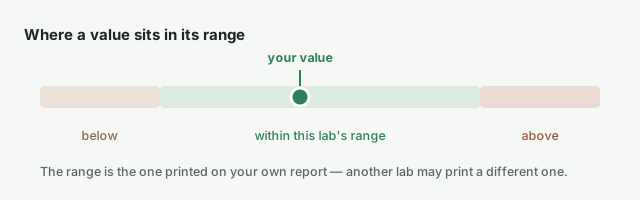
There isn’t one standard range for this test — each lab prints its own. Use the range shown next to your result.
Related guides
- Guide
Why the same blood test has different "normal" ranges at different labs
Reference intervals are built from each lab's own population and equipment, which is why two labs can print different ranges for the same sample.
- Guide
Reference interval, cutoff, and the "optimal" numbers online: three different things
The range beside your result, the target a website quotes, and the threshold that defines a condition are built in different ways and answer different questions.
- Guide
Why the same lab printed a different reference range for you this year
Ranges are not fixed constants. The lab can change method, revise its reference group, or apply a range that depends on your age — none of which is an error.
- Guide
What a urinalysis reports, and why several rows share names with blood tests
Three examinations printed as one page — appearance, a chemical dipstick, and a look under a microscope. Plus the naming collision that makes a urine row look like a blood result.